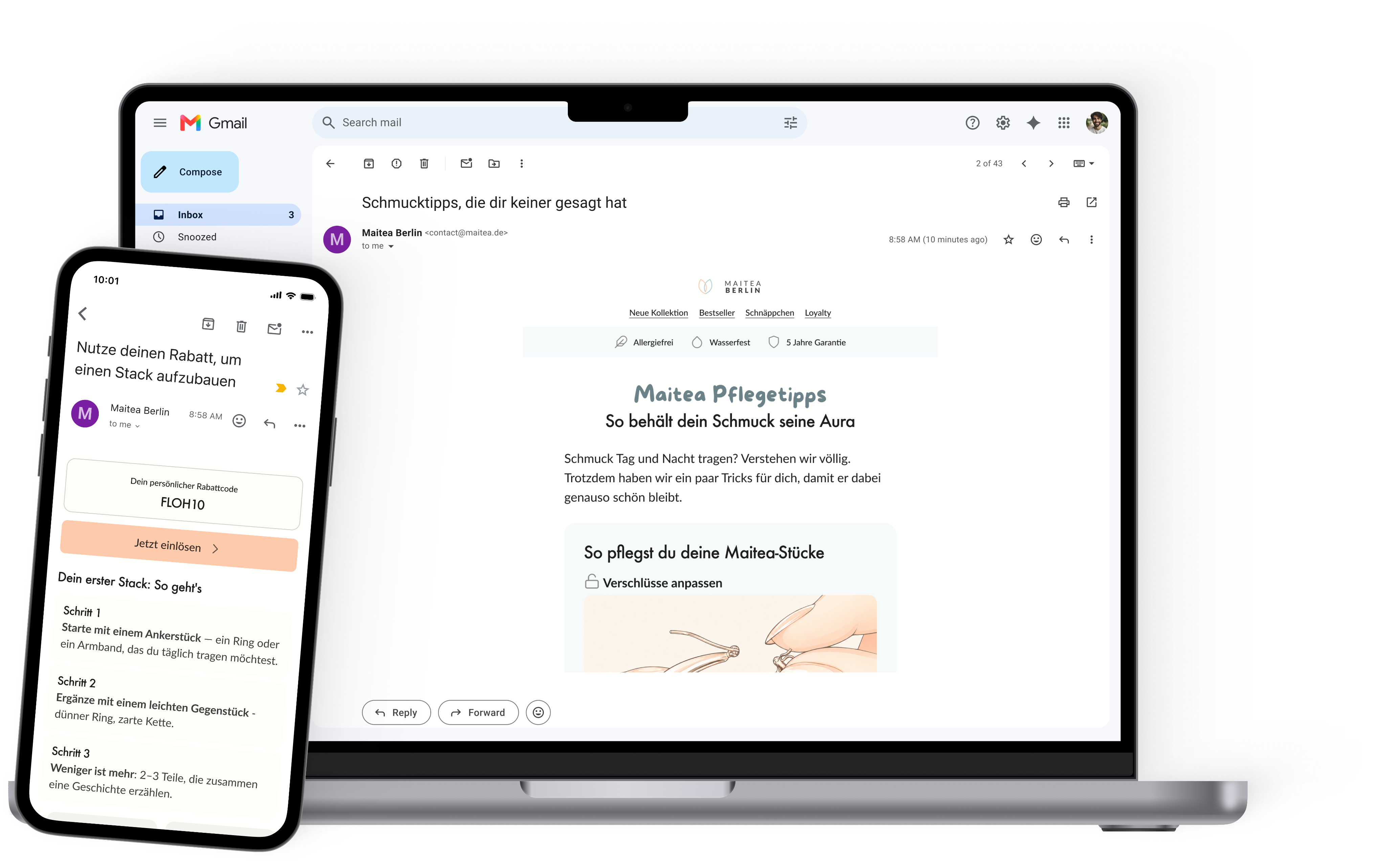


Turning first-time online buyers into returning Maitea customers
Email journey that builds relationships
Impact Summary
I redesigned Maitea’s customer communication journey by translating offline experiences into online ones. The initiative generated a 15% increase in CRM-related revenue, increased the repeat-purchase rate, and made customers 30% more likely to return to the website - creating a more connected and relationship-driven e-commerce experience.
Used tools:


Primary Role:
Product Designer

Time Frame:
04.2026 - 07.2026

User Base:
10.000+

Industry:
E-commerce
Oops, wrong device!
Try a laptop or tablet
The case study is currently not available on mobile. Use a laptop or tablet in order to view it.
Back to main page
Turning first-time online buyers into returning Maitea customers
Email journey that builds relationships
Impact Summary
I redesigned Maitea’s customer communication journey by translating offline experiences into online ones. The initiative generated a 15% increase in CRM-related revenue, increased the repeat-purchase rate, and made customers 30% more likely to return to the website - creating a more connected and relationship-driven e-commerce experience.
Primary Role:
Product Designer
Time Frame:
04.2026 - 07.2026
User Base:
10.000+
Industry:
E-commerce
Used tools:
Context
Discrepancy between offline and online shoppers
Maitea is a local jewelry brand in Berlin that specializes in waterproof and allegry-free jewelry.
Many local shoppers ere aware that not everyone could become a brand enthusiast. However, the tendency was clear: offline customers were more likely to return, while most online sales ended on a one-time purchase.
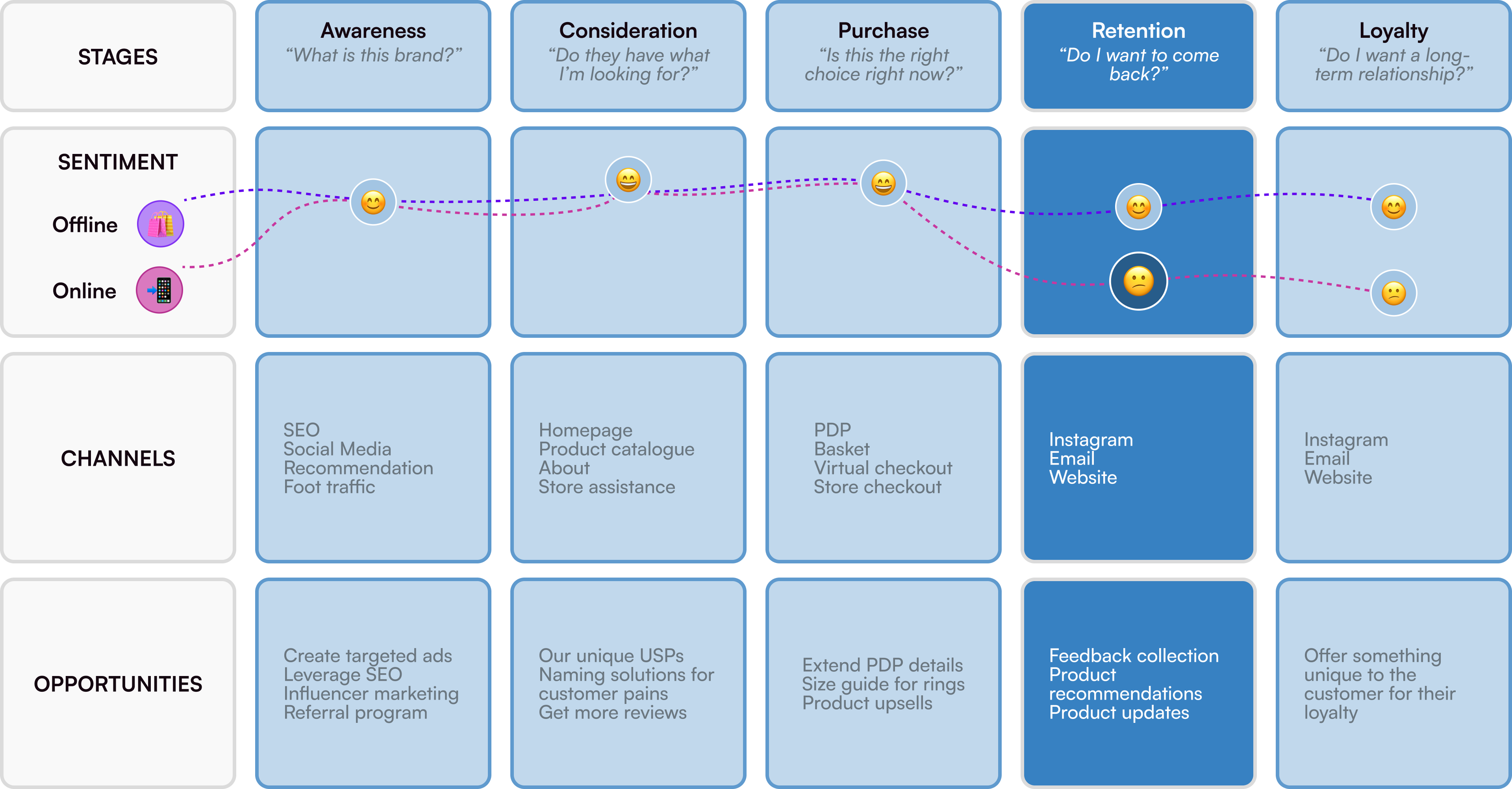
Problem discovery
We needed to understand what made customers return
“What motivates existing customers to return to Maitea, and which aspects of their experience contribute to that decision?”
RESEARCH OVERVIEW
🔍 📝Methodology:
Customer Interviews / Qualitative
📊 Sample Size:
8 offline customers, 8 online customers
👥 Target audience:
Existing customers - returning (Online/Offline)
Methodology 💬
- Why do Maitea customers come back?
- Motivation: What’s the reason for return?
- Experience: What stood out during the first visit?
- Emotions: What feelings accompanied them?
Ideation
How might we create a meaningful personal experience for Maitea online first-time buyers?
Key Insight
Online customers’ experience is less emotional than that of the offline ones.
Making an online purchase doesn’t offer a personal experience, which makes it less likely for the customer to return. This is a problem because it lowers trust, slows down company grow and sinks customer lifetime value.
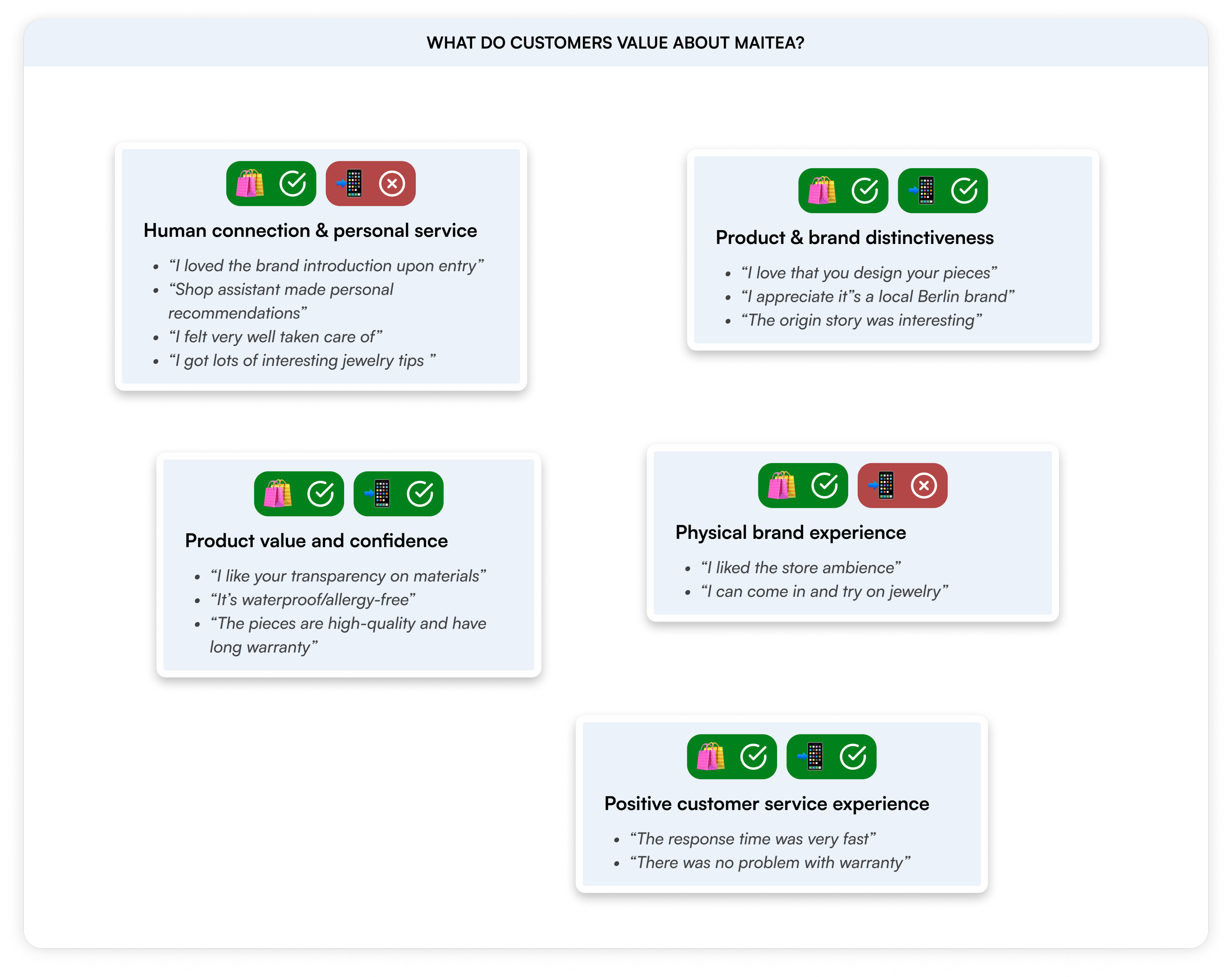
Key Insight
Online customers’ experience is less emotional than that of the offline ones.
Making an online purchase doesn’t offer a personal experience, which makes it less likely for the customer to return. This is a problem because it hinders trust, slows down company grow and customer lifetime value.
Idea generation and priorization
Choosing the winner based on impact and effort
From a number of ideas we came up with, we needed to agree on a common winner - not based on personal taste, but on a potential impact and technical complexity.
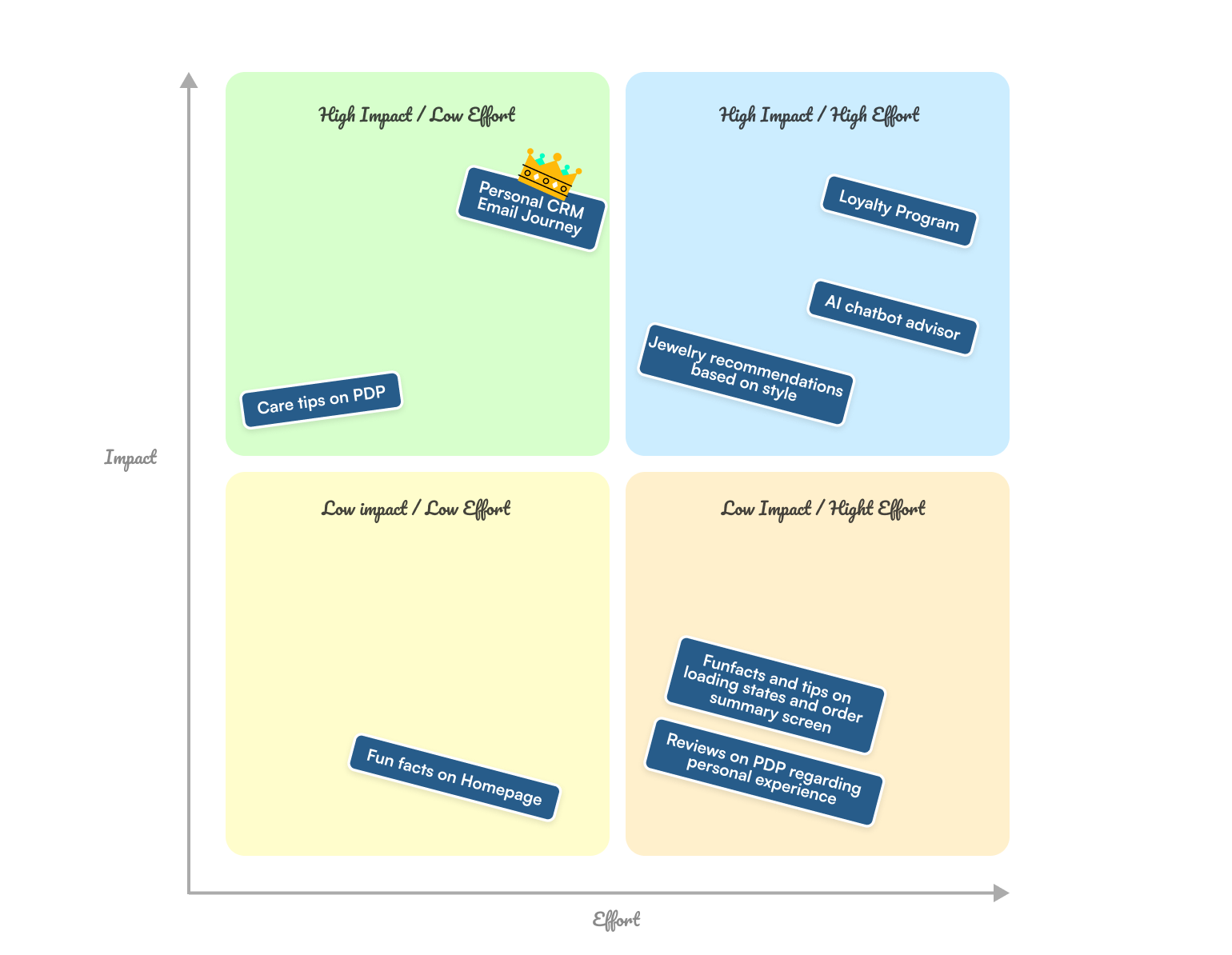
Our winning idea was a personal CRM journey due to multiple factors, some of which were:
- it created an ongoing and scalable communication channel
- it wasn’t tied to an on-site customer activity
- it tied to but didn’t require a rebuilt of the existing website architecture
- existing AI solutions enabled development by a designer
Capturing the journey
Mapping out the flow
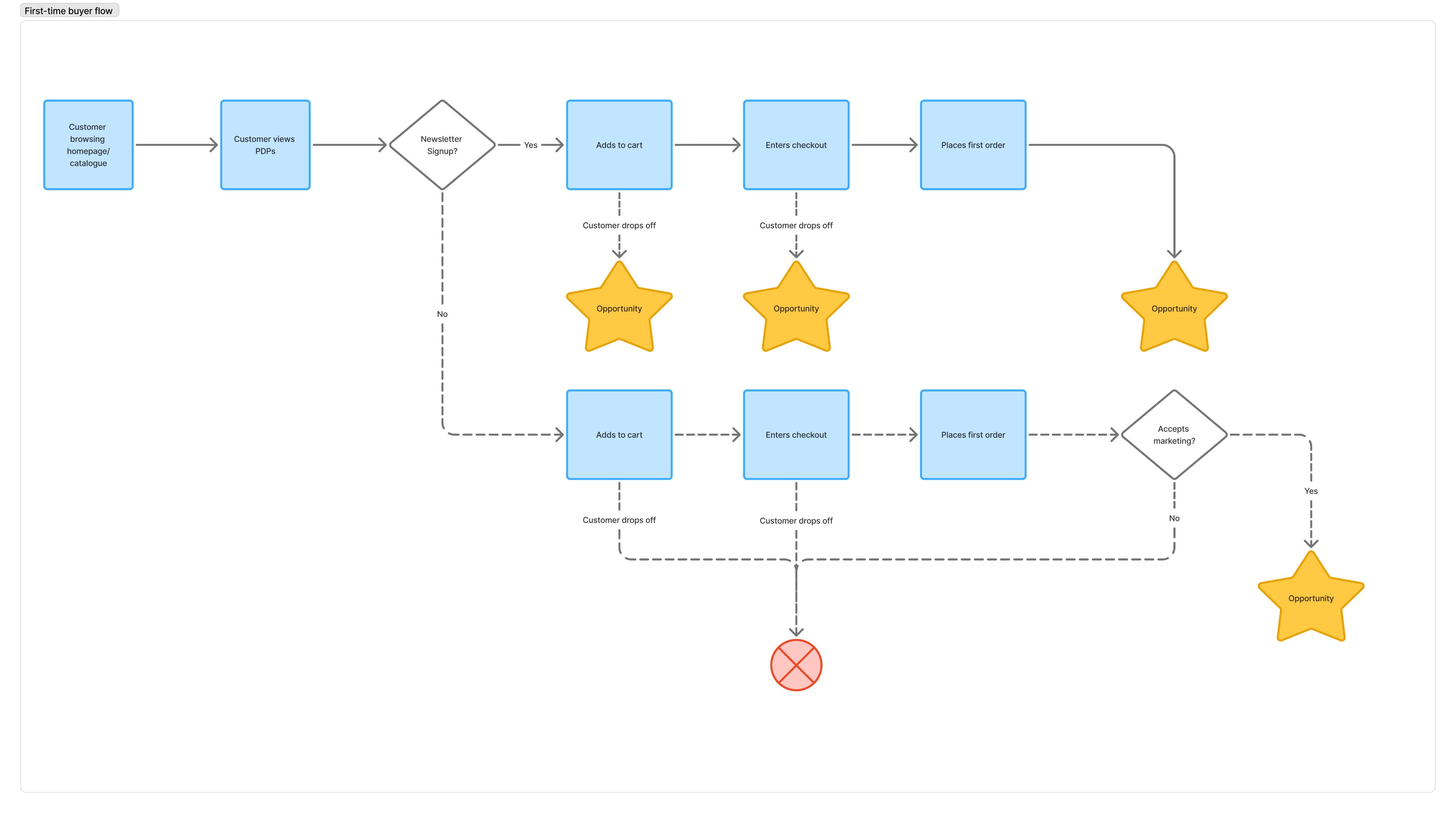
We didn’t want to treat the customer experience as siloed post-purchase campaign. The journey starts before the customer makes their purchase. Hence, we defined a first time buyer as someone who shows intent of buying. In the e-commerce space, it translated into a newsletter sign-up.
First drafts, first tests
AI-assisted execution
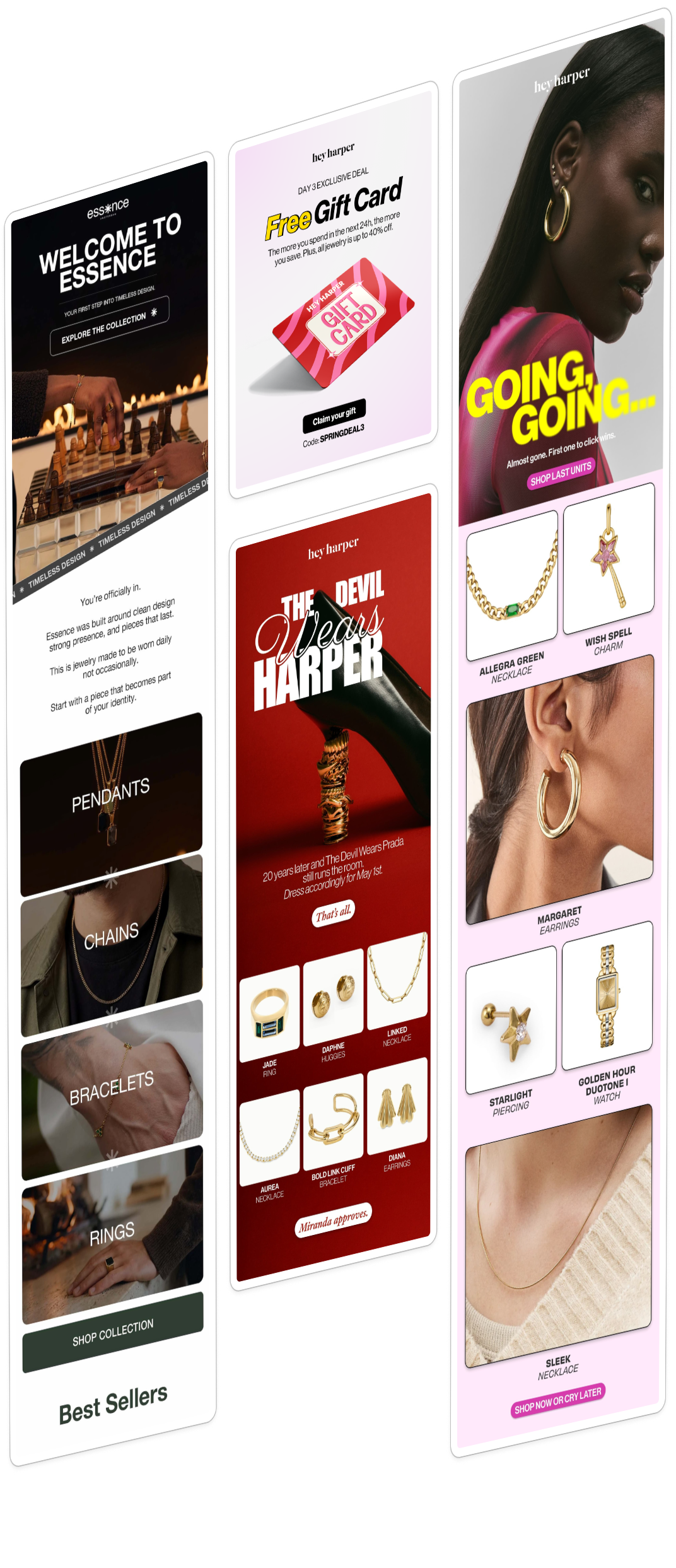
After defining the scope and narrowing it down to a few use cases, I did a competitive benchmarking from competitors, which helped me establish the requirements around content and email structure. I then used AI to accelerate documentation, task definition, and the creation of initial visual drafts.
1
Benchmark & define
Carried out competitieve research and email experience requirements.
2
Generate PRD
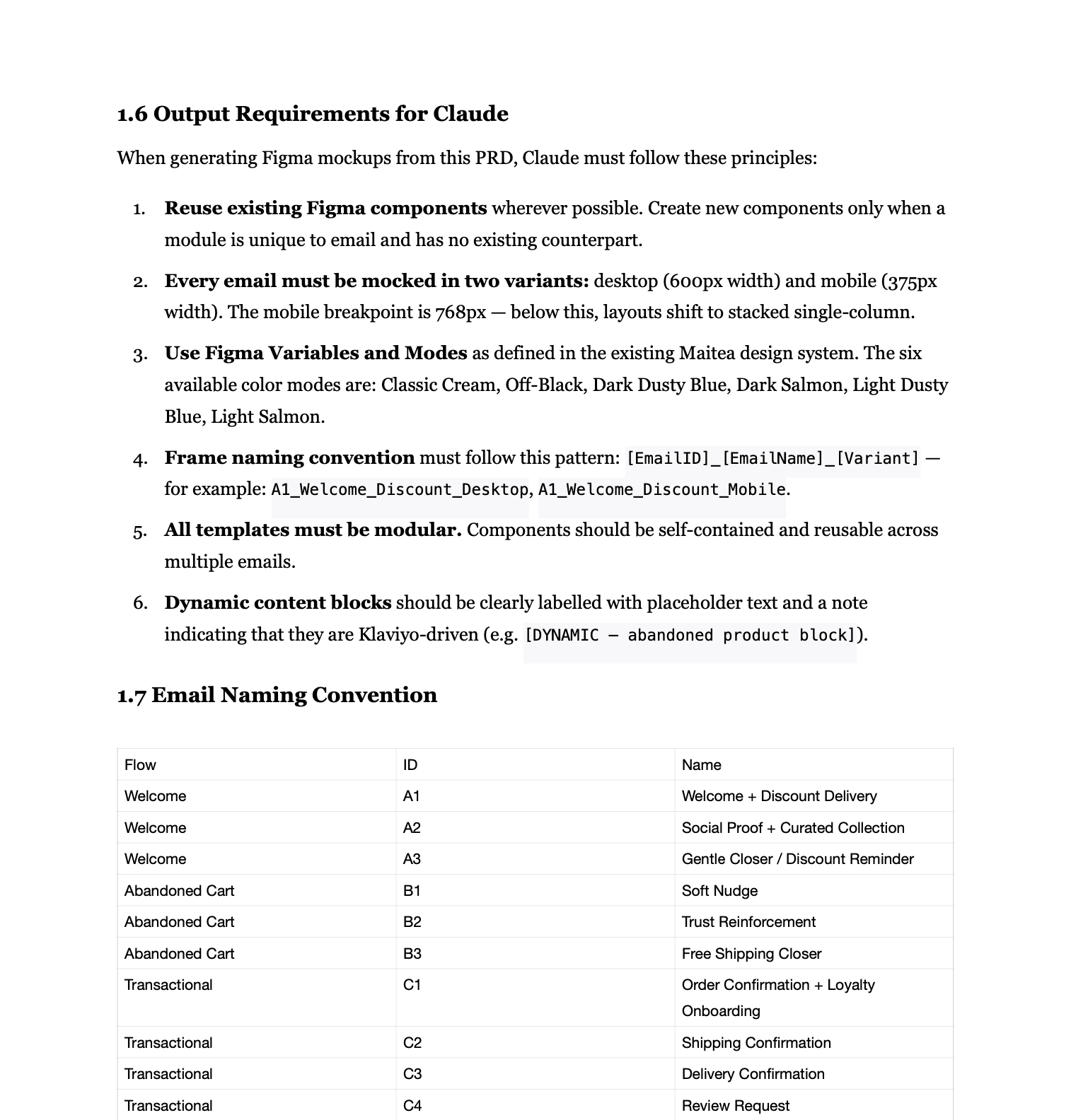
Documented timing, content style, flow logic, and structural requirements. Refined manually.
3
Derive visual language
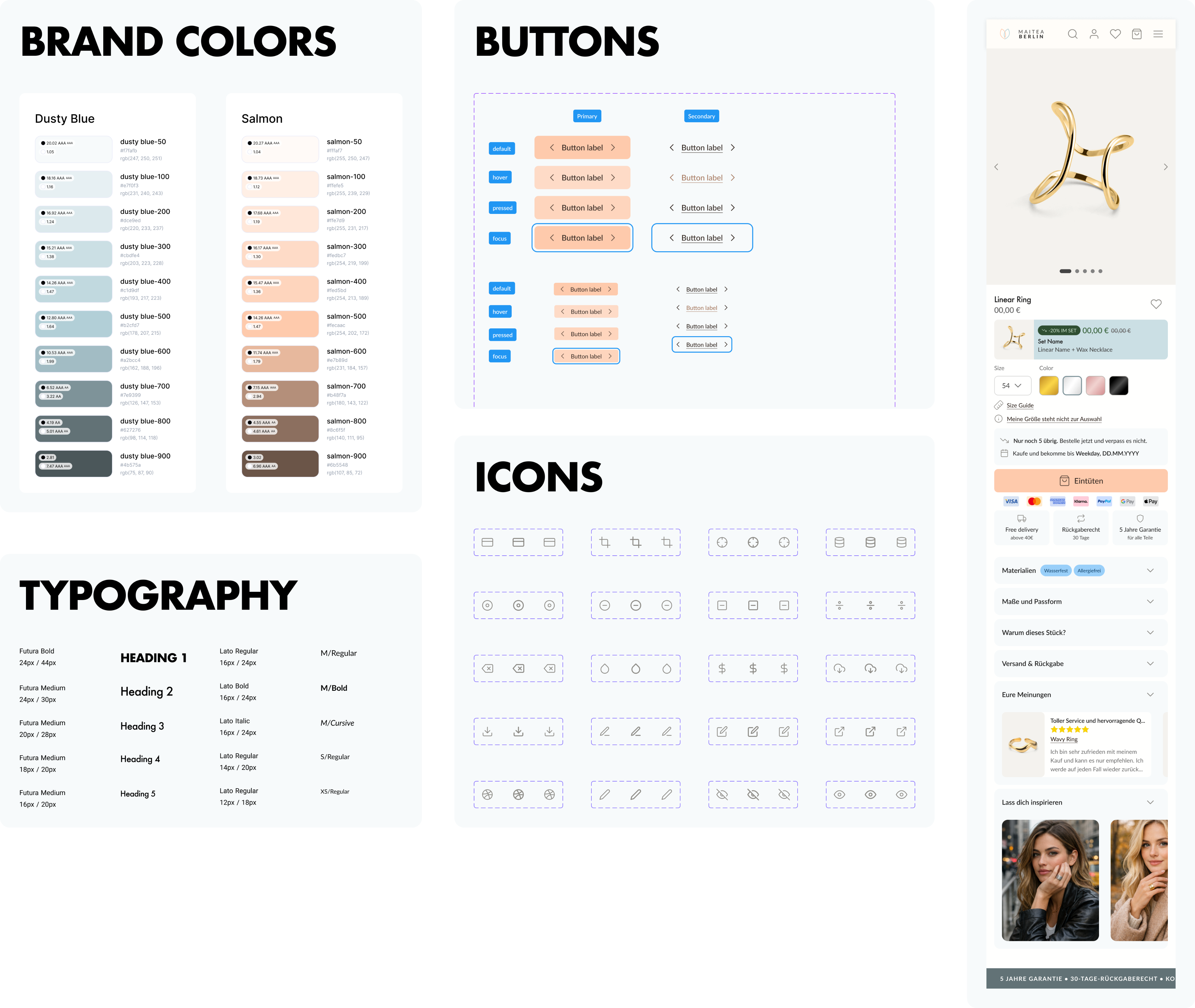
Used Claude Code to establish email-specific rules, components, and visual guidelines based on the existing design system I had previously created.
4
Generate drafts and refine
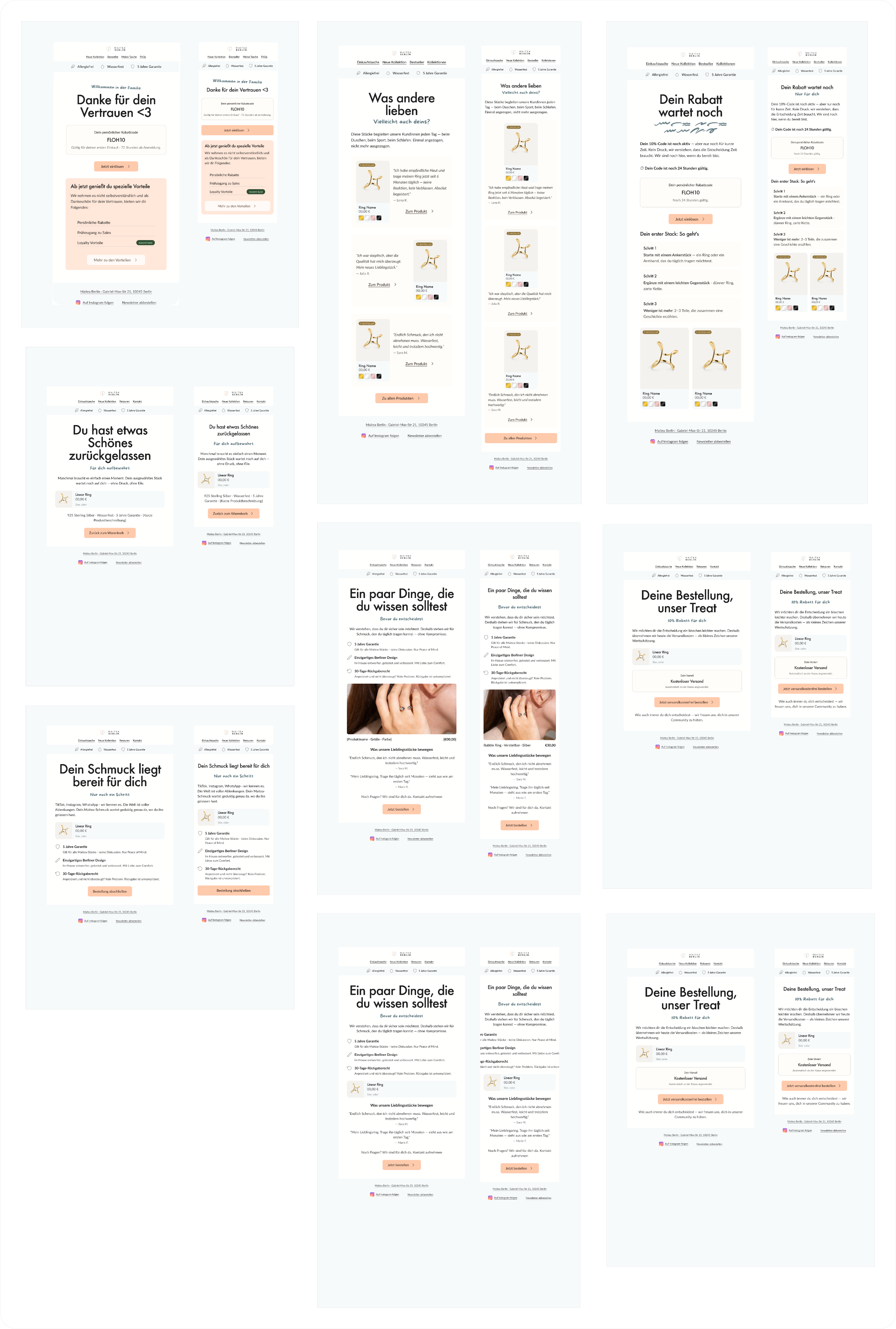
I was able to generate high fidelity, almost fully faithful mock-ups of the conceptualized emails.
5
Test and iterate
This is where the human factor comes in that AI can’t replace: human feedback. The testing with customers was done not to confirm the success of the solution, but to assess the content fit and emotional response.
💡 Insight
Action
Usability
“It’s exciting tips but a little too much to read”
Progressive disclosure: zoom in on one tip, but give option to read more
💡 Insight
Action
Discoverability
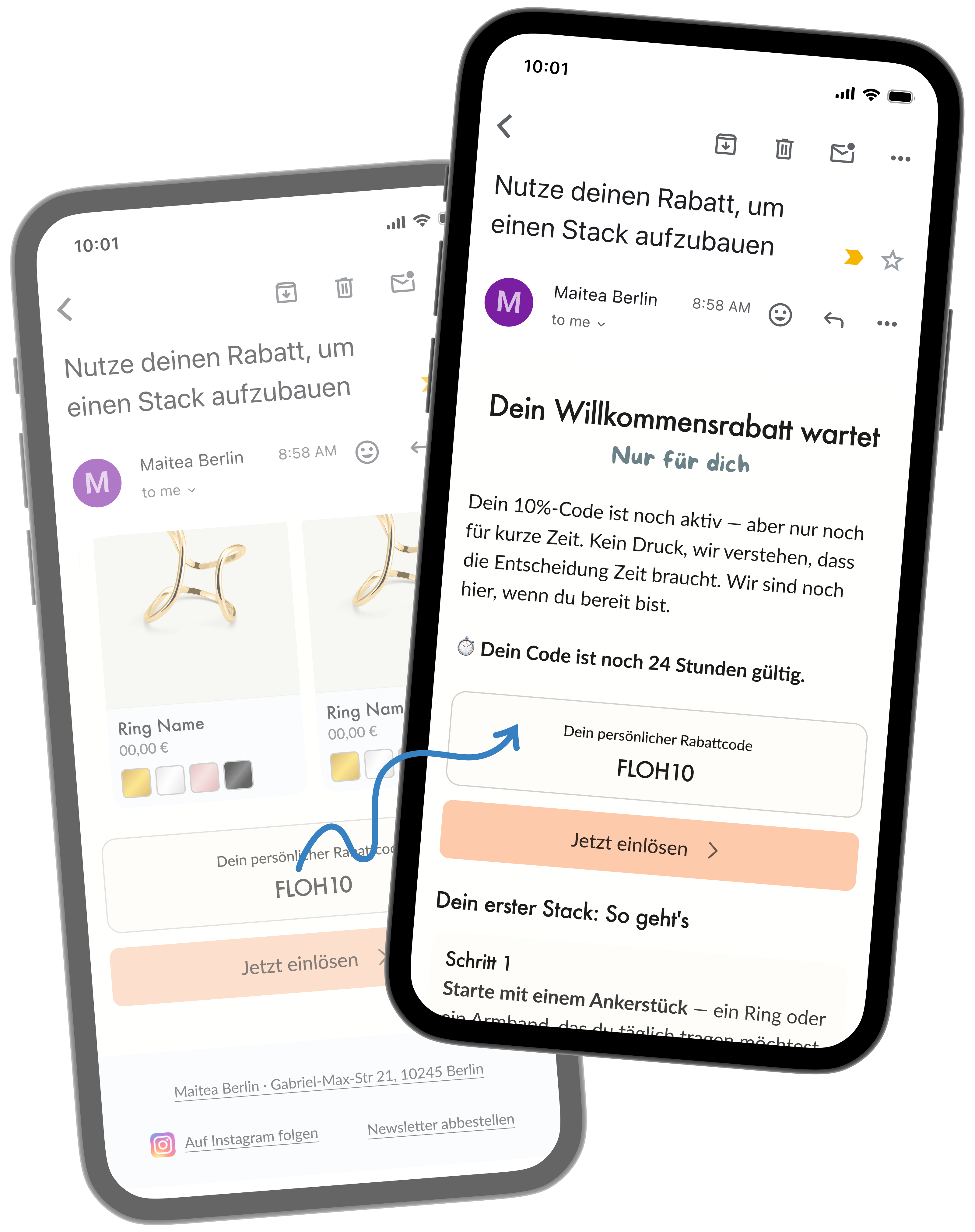
“Wo ist der Rabatt-Code?”
Move critical content above to help user achieve the task
💡 Insight
Action
Accessibility
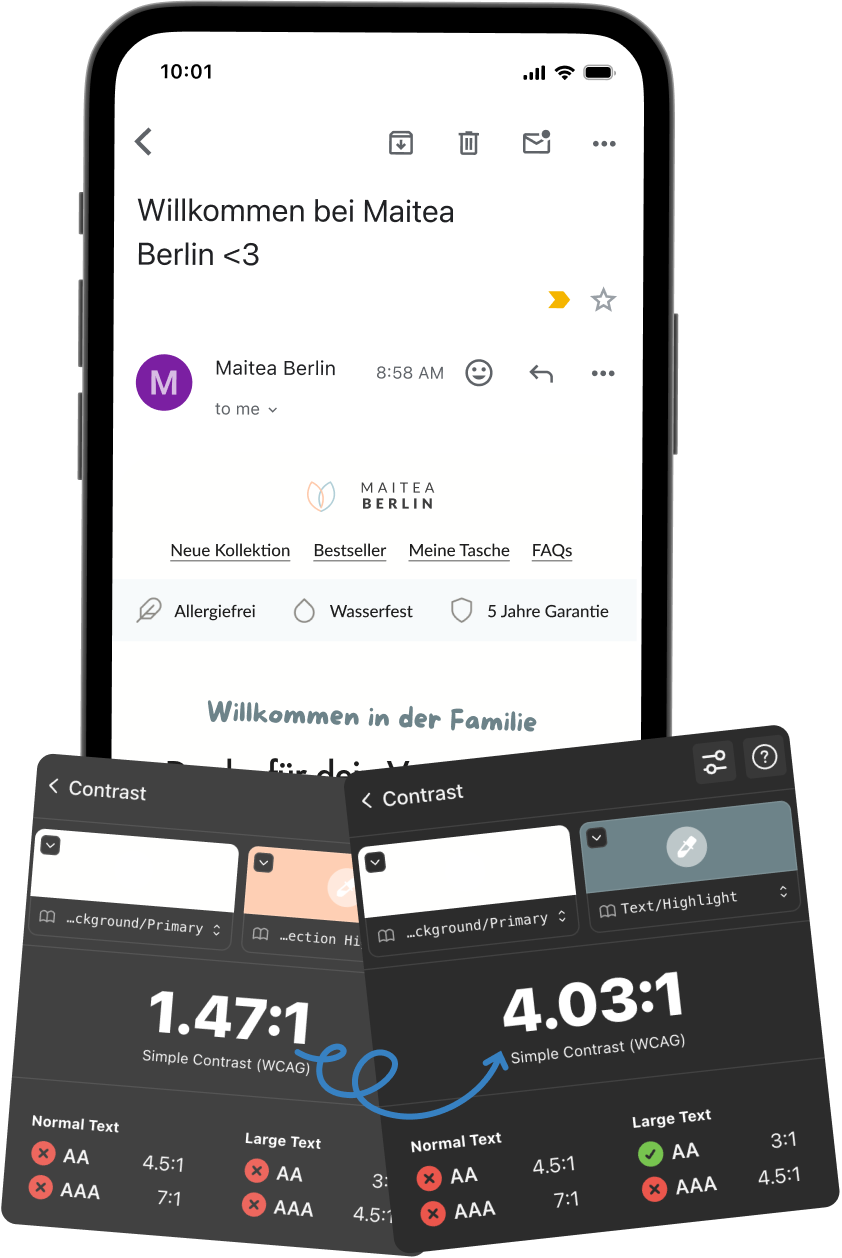
Failed WCAG 2.1 AA Contrast Guidelines
Ensure text-background contrast 4.5:1 for small and 3:1 for large text
6
Ship & implement
Thanks to the MCPs for Figma and Klaviyo (our CRM tool), it was possible to convert the final designs direclty into HTML, cutting efforts for manual development.
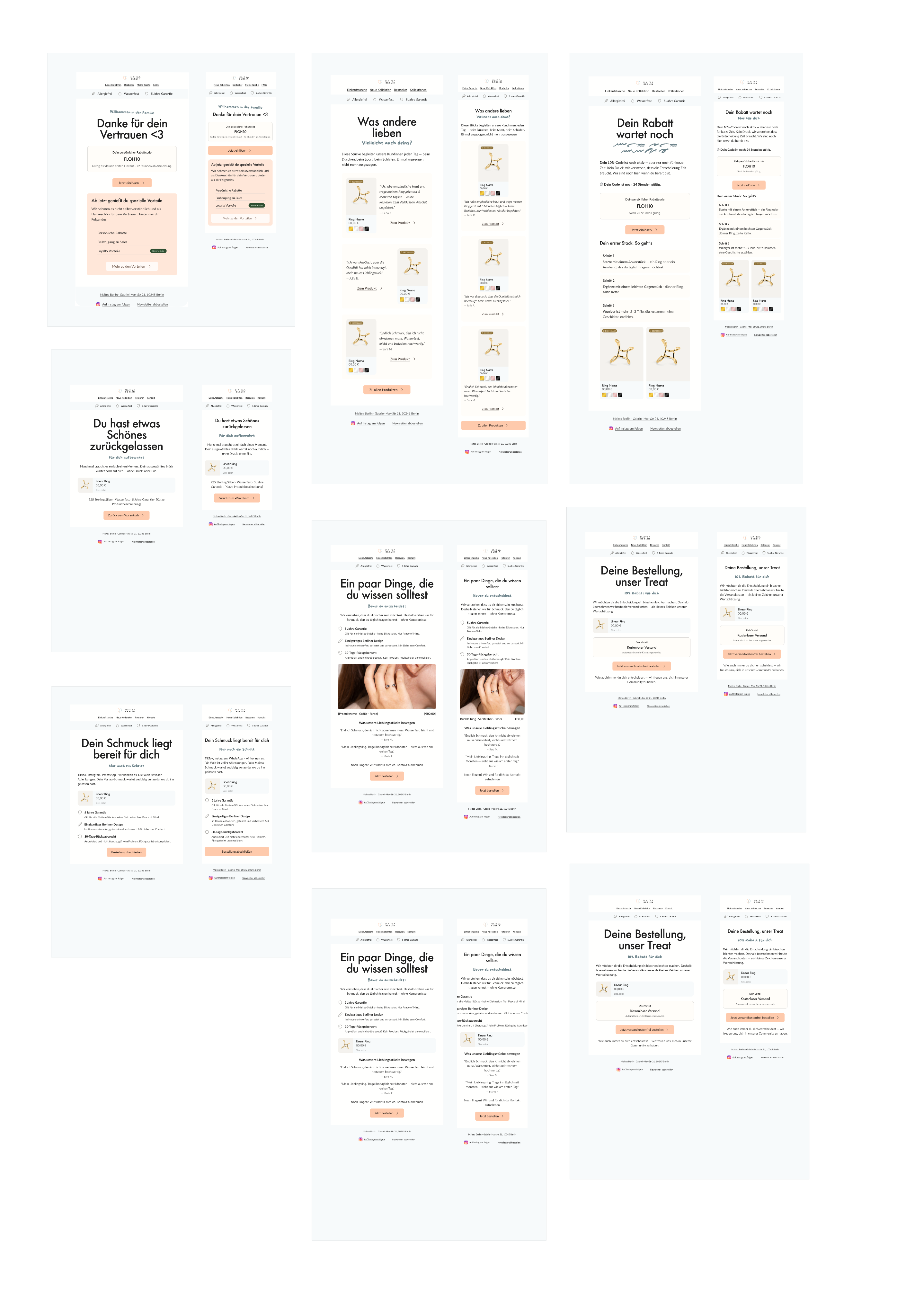
derives layouts, styles, tokens
translates to HTML & embedded styles,pushes code




Measuring the outcome
Success criteria & impact
Via A/B testing, we evaluated the redesigned customer communication experience through business performance and customer engagement.
+15% CRM-related revenue uplift
Revenue per customer grew by 15% in the treatment group who received our email communication, compared to the control group.
+ 6pp for repeat-purchase rate
15% of customers made a repeated purchase within 90 days from the initial purchase, as compared to 9% from the control group.
+30% likelihood of return to website
Customers in the treatment group were 30% more likely to return to the website than customers in the control group.
Beyond the initial test
Solution optimization and further steps
After proving the success of the experiment, we identified further opportunities for the solution optimization:
⭐️ Personalization
Timing
⭐️ Segmentation
⭐️ Loyalty Program
Personalize content based on purchase history
Refine and optimize timing
Customer segments and product-related use cases
Build a system that rewards loyalty
The next phase would focus on making the customer communication experience more relevant and effective over time.
By refining message timing, expanding personalization, and adapting content to customer segments, we could further strengthen customer engagement and encourage long-term relationships with Maitea.
Thank you & more
Further contributions
If you got this far, thank you from the bottom of my heart for taking interest in my work. My contribution at Maitea didn’t end there, therefore I am sharing a quick summary of my other projects:
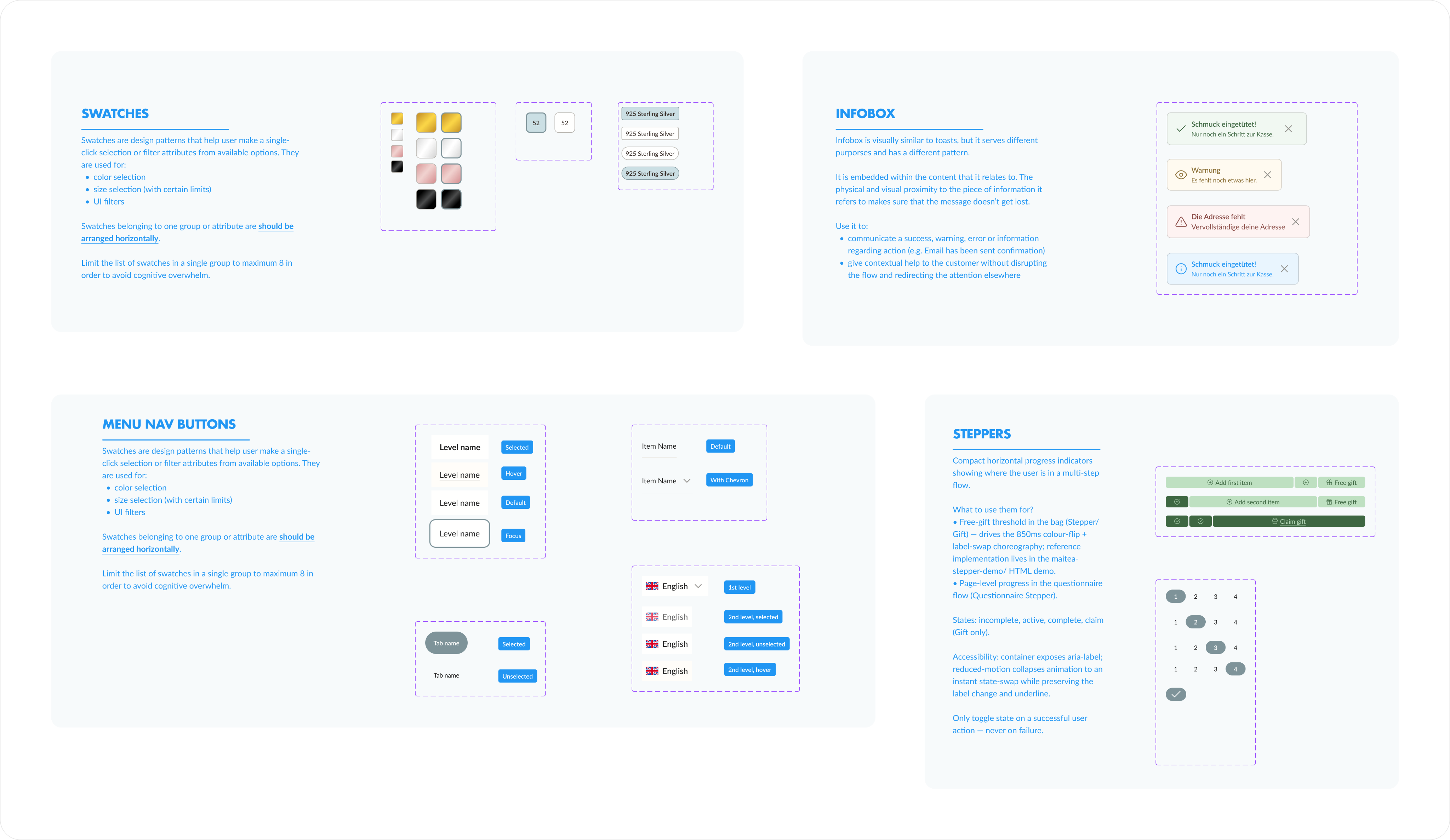
Maitea Design System
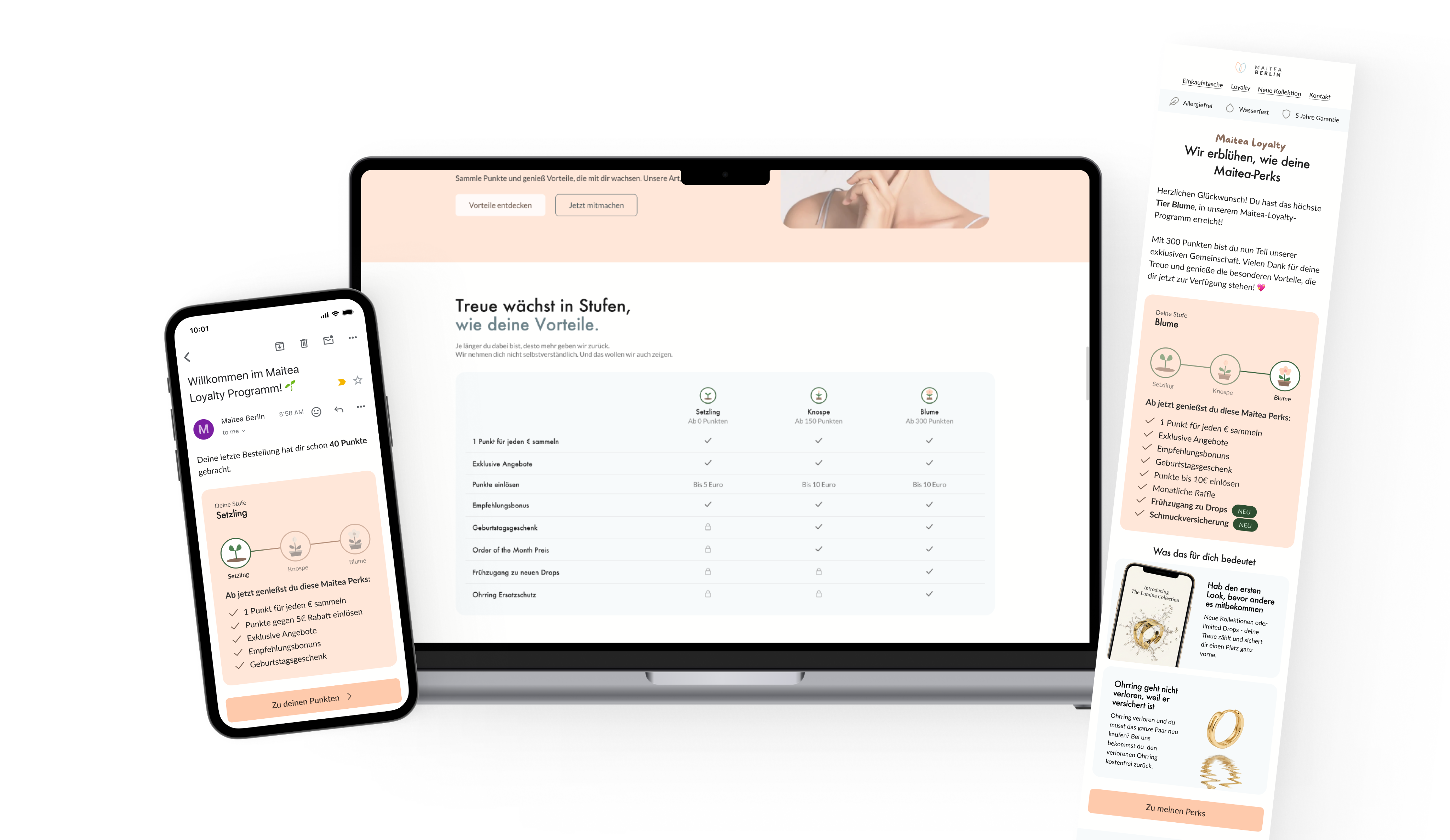
Loyalty Program
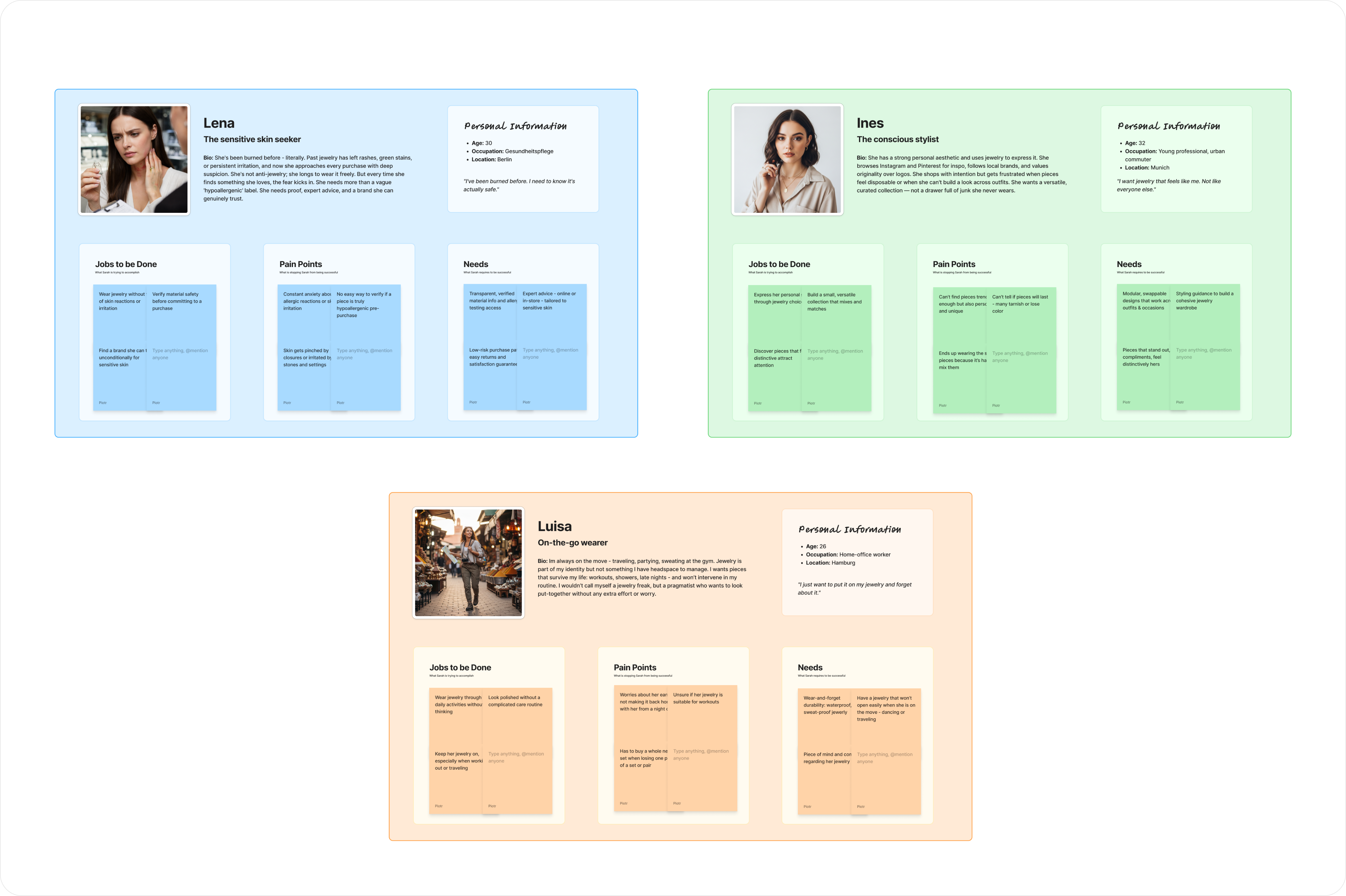
Persona-driven content design
Turning first-time online buyers into returning Maitea customers
Email journey that builds relationships
Impact Summary
I redesigned Maitea’s customer communication journey by translating offline experiences into online ones. The initiative generated a 15% increase in CRM-related revenue, increased the repeat-purchase rate, and made customers 30% more likely to return to the website - creating a more connected and relationship-driven e-commerce experience.
Used tools:


Primary Role:
Product Designer

Time Frame:
04.2026 - 07.2026

User Base:
10.000+

Industry:
E-commerce
Context
Discrepancy between offline and online shoppers
Maitea is a local jewelry brand in Berlin that specializes in waterproof and allegry-free jewelry. As the brand grew, more and more local shoppers kept returning, and were even becoming the brand enthusiasts.
Even though we were aware not everyone could become a Maitea fan, the tendency was clear: offline customers were more likely to return, while most online sales ended on a one-time purchase.
Problem discovery
We needed to understand what made customers return
“What motivates existing customers to return to Maitea, and which aspects of their experience contribute to that decision?”
RESEARCH OVERVIEW
📝 Methodology:
Customer Interviews / Qualitative
👥 Target audience:
Existing customers - returning (Online/Offline)
📊 Sample Size:
8 offline customers, 8 online customers
🔍 Research subject:
Why do Maitea customers come back?
- Motivation: What’s the reason for return?
- Experience: What stood out during the first visit?
- Emotions: What feelings accompanied them?
Key Insight
Online customers’ experience is less emotional than that of the offline ones.
Making an online purchase doesn’t offer a personal experience, which makes it less likely for the customer to return. This is a problem because it lowers trust, slows down company grow and sinks customer lifetime value.
Now that we established the core gap between the offline and online experience, it was time to move towards possible solutions. Thus, we asked ourselves this question...
Ideation
How might we create a meaningful personal experience for Maitea first-time online buyers?
Idea generation and priorization
Choosing the winner based on impact and effort
From a number of ideas we came up with, we needed to agree on a common winner - not based on personal taste, but on a potential impact and technical complexity.
Our winning idea was a personal CRM journey due to multiple factors, some of which were:
- it created an ongoing and scalable communication channel
- it wasn’t tied to an on-site customer activity
- it tied to but didn’t require a rebuilt of the existing website architecture
- existing AI solutions enabled development by a designer
Capturing the journey
Mapping out the flow
We didn’t want to treat the customer experience as siloed post-purchase campaign. The journey starts before the customer makes their purchase. Hence, we defined a first time buyer as someone who shows intent of buying. In the e-commerce space, it translated into a newsletter sign-up.
First drafts, first tests
AI-assisted execution
After defining the scope and narrowing it down to a few use cases, I did a competitive benchmarking from competitors, which helped me establish the requirements around content and email structure. I then used AI to accelerate documentation, task definition, and the creation of initial visual drafts.
1
Benchmark & define
Carried out competitive research among direct and indirect competitive jewelry brands to identify learnings and gaps.
2
Generate PRD
Documented timing, content style, flow logic, and structural requirements. Refined manually.
3
Derive visual language
Used Claude Code to establish email-specific rules, components, and visual guidelines based on the existing design system I had previously created.
4
Generate drafts and refine
I was able to generate high fidelity, almost fully faithful mock-ups of the design concept. However - like everything AI generates - they needed some refinement, esp. in terms of: spacing and alignment, consistency, and accessibility adherence.
5
Test and iterate
This is where the human factor comes in that AI can’t replace: human feedback. The testing with customers was done not to confirm the success of the solution, but to assess the content fit and emotional response.
💡 Insight
Action
Usability
“It’s exciting tips but a little too much to read”
Progressive disclosure: zoom in on one tip, but give option to read more
💡 Insight
Action
Discoverability
“Wo ist der Rabatt-Code?”
Move critical content above to help user achieve the task
💡 Insight
Action
Accessibility
Failed WCAG 2.1 AA Contrast Guidelines
Ensure text-background contrast 4.5:1 for small and 3:1 for large text
6
Ship & implement
Thanks to the MCPs for Figma and Klaviyo (our CRM tool), it was possible to convert the final designs direclty into HTML, cutting efforts for manual development.
derives layouts, styles, tokens
translates to HTML & embedded styles,pushes code
Measuring the outcome
Success criteria & impact
Via A/B testing, we evaluated the redesigned customer communication experience through business performance and customer engagement.
+15% CRM-related revenue uplift
Revenue per customer grew by 15% in the treatment group who received our email communication, compared to the control group.
+ 6pp for repeat-purchase rate
15% of customers made a repeated purchase within 90 days from the initial purchase, as compared to 9% from the control group.
+30% likelihood of return to website
Customers in the treatment group were 30% more likely to return to the website than customers in the control group.
Beyond the initial test
Solution optimization and further steps
After proving the success of the experiment, we identified further opportunities for the solution optimization:
⭐️ Personalization
⭐️ Timing
⭐️ Segmentation
⭐️ Loyalty Program
Personalize content based on purchase history
Refine and optimize timing
Customer segments and product-related use cases
Build a system that rewards loyalty
The next phase would focus on making the customer communication experience more relevant and effective over time.
By refining message timing, expanding personalization, and adapting content to customer segments, we could further strengthen customer engagement and encourage long-term relationships with Maitea.
Thank you & more
Further contributions
If you got this far, thank you from the bottom of my heart for taking interest in my work. My contribution at Maitea didn’t end there, therefore I am sharing a quick summary of my other projects:
Maitea Design System
Loyalty Program
Persona-driven content design